People often use "dentist" and "orthodontist" interchangeably, but they are not the same thing. An orthodontist in Karachi has completed additional specialist training beyond a general dental degree, focused specifically on correcting how teeth and jaws are aligned.
If you are dealing with crooked teeth, a misaligned bite, or considering braces for yourself or your child, this is the specialist you actually need to see. Here is how to know for sure, and what to look for in a qualified orthodontist in Karachi.
What an Orthodontist Actually Does
A general dentist handles checkups, fillings, cleanings, and basic extractions. An orthodontist focuses specifically on tooth alignment and bite correction, using tools like braces, Invisalign aligners, retainers, and in some cases jaw expanders.
The extra training matters because moving teeth safely requires understanding how much pressure to apply, in what direction, and over what timeframe, without damaging the roots or surrounding bone. This is a distinct skill set from general dentistry.
Signs You Might Need an Orthodontist
A few common signs suggest it is worth booking a consultation. Crowded or overlapping teeth are one of the most common reasons patients in Karachi seek orthodontic treatment. Gaps between teeth, an overbite or underbite, or jaw pain when chewing are other common triggers.
For children, orthodontists often recommend an initial evaluation around age seven, even if treatment does not start until later. Early evaluation helps catch developing bite issues while a child's jaw is still growing, which can make later treatment simpler.
How to Check If an Orthodontist Is Properly Qualified
Look for a dentist with specific orthodontic credentials beyond the base dental degree, often listed as D-Ortho or C-Ortho. This indicates formal post-graduate training in orthodontics rather than a general dentist who occasionally fits braces.
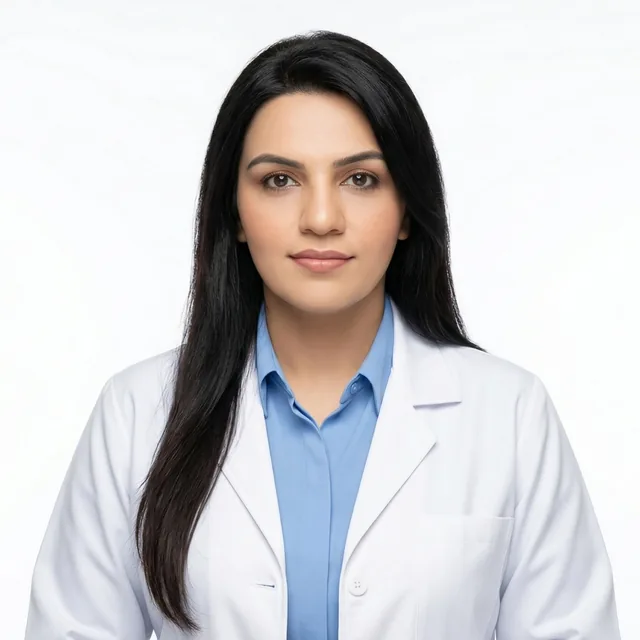
At Alkhaleej Smile Clinic, Dr. Sadia Saif holds a D-Ortho qualification alongside her general dental degree and is PMDC registered as a Consultant Orthodontist and Implantologist. Checking for credentials like this is the fastest way to confirm you are seeing a true specialist rather than a general dentist offering braces as an add on service.
What Treatment Options an Orthodontist in Karachi Typically Offers
Most established orthodontists in Karachi offer a range of options depending on your case and budget.
- Metal braces, the most affordable and commonly used option
- Ceramic braces, which blend more naturally with tooth colour
- Lingual braces, placed behind the teeth for a hidden look
- Invisalign clear aligners, removable and far less visible
Each option suits different cases, budgets, and lifestyle preferences, which is why a proper consultation and X-ray assessment matters before committing to one.
What a First Orthodontic Consultation Involves
A proper first visit typically includes a full oral examination, X-rays or 3D scans to assess tooth and jaw positioning, and a discussion of treatment options with realistic timelines. A good orthodontist will explain why they recommend a particular approach rather than simply pushing the most expensive option.
This is also the right time to ask about total treatment duration, the number of follow up visits required, and the full cost breakdown so there are no surprises later.
Adults and Orthodontic Treatment
There is no upper age limit for orthodontic treatment. Plenty of adults in their thirties, forties, and beyond successfully straighten their teeth, provided their gums and jawbone are healthy enough to support tooth movement. Invisalign in particular has become popular with working professionals who want a less visible option during treatment.
Frequently Asked Questions (FAQs)
What is the difference between a dentist and an orthodontist in Karachi?
A general dentist handles routine oral care like cleanings and fillings, while an orthodontist has additional specialist training focused on correcting tooth alignment and bite issues using braces or aligners.
At what age should a child first see an orthodontist?
Most orthodontists recommend an initial evaluation around age seven, even if active treatment does not begin until later, so developing bite issues can be monitored early.
Can adults get orthodontic treatment in Karachi?
Yes, there is no upper age limit for braces or Invisalign as long as the gums and jawbone are healthy. Many adults choose Invisalign for a less visible treatment option.
How do I know if an orthodontist in Karachi is properly qualified?
Check for PMDC registration along with specific orthodontic credentials such as D-Ortho or C-Ortho, which indicate formal post-graduate training beyond a general dental degree.
Do all dentists in Karachi who offer braces count as orthodontists?
No. Some general dentists offer basic braces services without specialist orthodontic training. For more complex cases, a dedicated orthodontist with formal credentials is the safer choice.
How long does orthodontic treatment usually take?
Most cases take between twelve and eighteen months, though this varies based on the complexity of the alignment issue and the type of braces or aligners used.
What happens during a first orthodontic consultation?
Expect a full oral exam, X-rays or scans to assess tooth and jaw positioning, and a discussion of suitable treatment options along with estimated cost and duration.
The Bottom Line
If you are dealing with crooked teeth, bite problems, or are considering braces for yourself or your child, an orthodontist with verified credentials, not just a general dentist, is the right specialist to see. Confirm their qualifications before booking and ask detailed questions about your specific case during the first consultation.
Alkhaleej Clinics lists its PMDC registered orthodontic specialists and full range of braces and aligner options for patients across Karachi.