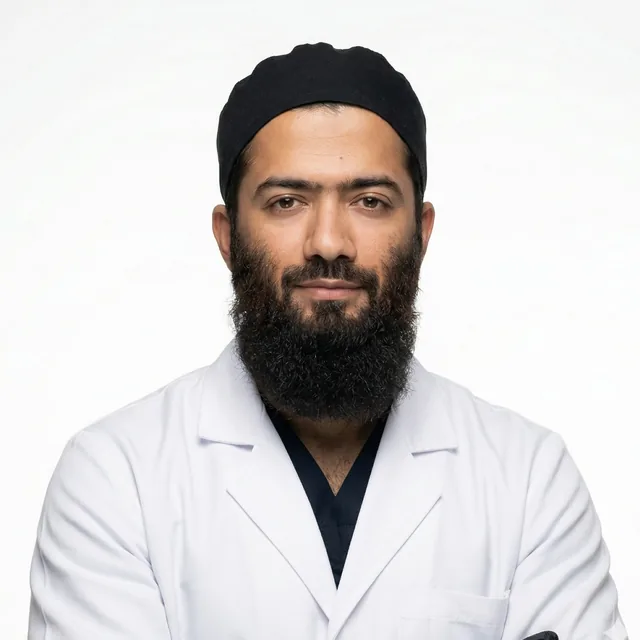
 Medically Reviewed by Dr. Ahmed Godil, Hair Transplant Surgeon, MBBS, Fellowship in Hair Transplant
The hair transplant industry has grown quickly, and with that growth has come a rise in unlicensed operators offering procedures without proper medical credentials. Understanding the real risks of choosing an unlicensed hair transplant clinic can protect you from a decision that is very difficult to undo.
For more on this, see our best hair transplant in Karachi page.
Why Licensing and Certification Matter
A PMDC-certified surgeon has undergone verified medical training and is held to professional standards of practice. This licensing exists specifically to protect patients from unqualified individuals performing what is, ultimately, a surgical medical procedure.
Unlicensed operators may have no formal medical training at all, relying instead on informal experience that has never been independently verified.
Real Risks of Unlicensed Providers
- Higher risk of poor graft survival due to improper extraction and implantation technique
- Increased infection risk from inadequate sterilization standards
- Permanent scarring from improper technique, which can limit future correction options
- Unnatural looking results from poor hairline design and graft placement planning
- No accountability or recourse if something goes seriously wrong
Why Low Prices Often Correlate With Unlicensed Providers
Unlicensed clinics can often offer significantly lower prices because they are not covering the costs of proper medical training, certified staff, or facility standards. This connects directly to our guide on cheap hair transplant in Pakistan and what you risk by paying less.
How to Verify a Clinic's Credentials
> When to See a Doctor First: Ask directly whether the surgeon performing your procedure is PMDC-certified, and ask to see this credential confirmed rather than simply taking a clinic's word for it. A legitimate clinic will have no issue providing this information.
Beyond checking credentials, ask about the clinic's facility standards, sterilization protocols, and how long they have been operating with verifiable patient outcomes.
The Cost of Correcting a Poor Outcome
If an unlicensed provider causes scarring, poor graft survival, or an unnatural result, correcting this often requires a more complex and expensive procedure than a properly performed transplant would have cost from the start. Some damage, particularly extensive scarring, cannot always be fully corrected.
Choosing a Verified, Licensed Clinic
AlKhaleej Clinics uses PMDC-certified surgeons across its hair transplant program at Bahadurabad and DHA Phase 4. A free hair transplant consultation is a good opportunity to verify credentials directly and ask any safety related questions.
You can also explore all of our services at Alkhaleej Clinics.
Frequently Asked Questions (FAQs)
Why does PMDC certification matter for a hair transplant surgeon?
It confirms verified medical training and holds the surgeon to professional standards, protecting patients from unqualified providers performing a surgical procedure.
Are unlicensed hair transplant clinics common?
Unfortunately yes, particularly in markets with high demand, which makes verifying credentials directly an important step before booking anywhere.
What are the biggest risks of an unlicensed provider?
Poor graft survival, increased infection risk, permanent scarring, and unnatural results are among the most serious risks of unlicensed providers.
How can I verify a surgeon's credentials?
Ask the clinic directly for confirmation of PMDC certification and be cautious of any clinic unwilling or unable to provide this clearly.
Can a poor result from an unlicensed clinic be fixed later?
Sometimes, though correction is often more complex and expensive than a properly performed procedure would have been, and some damage cannot be fully reversed.
Does a lower price always mean an unlicensed provider?
Not always, but a significantly lower price is common among unlicensed operators cutting costs on training, sterilization, and facility standards.
Verifying your surgeon's credentials is one of the simplest, most important steps you can take before a hair transplant. It takes only a few direct questions, and it protects a decision that is genuinely permanent.
> Medical Disclaimer: This article is for general educational purposes and does not replace personalized medical advice. Individual results vary by case. Surgeons referenced in this content are PMDC-registered, and clinical guidance aligns with standards published by the International Society of Hair Restoration Surgery (ISHRS).